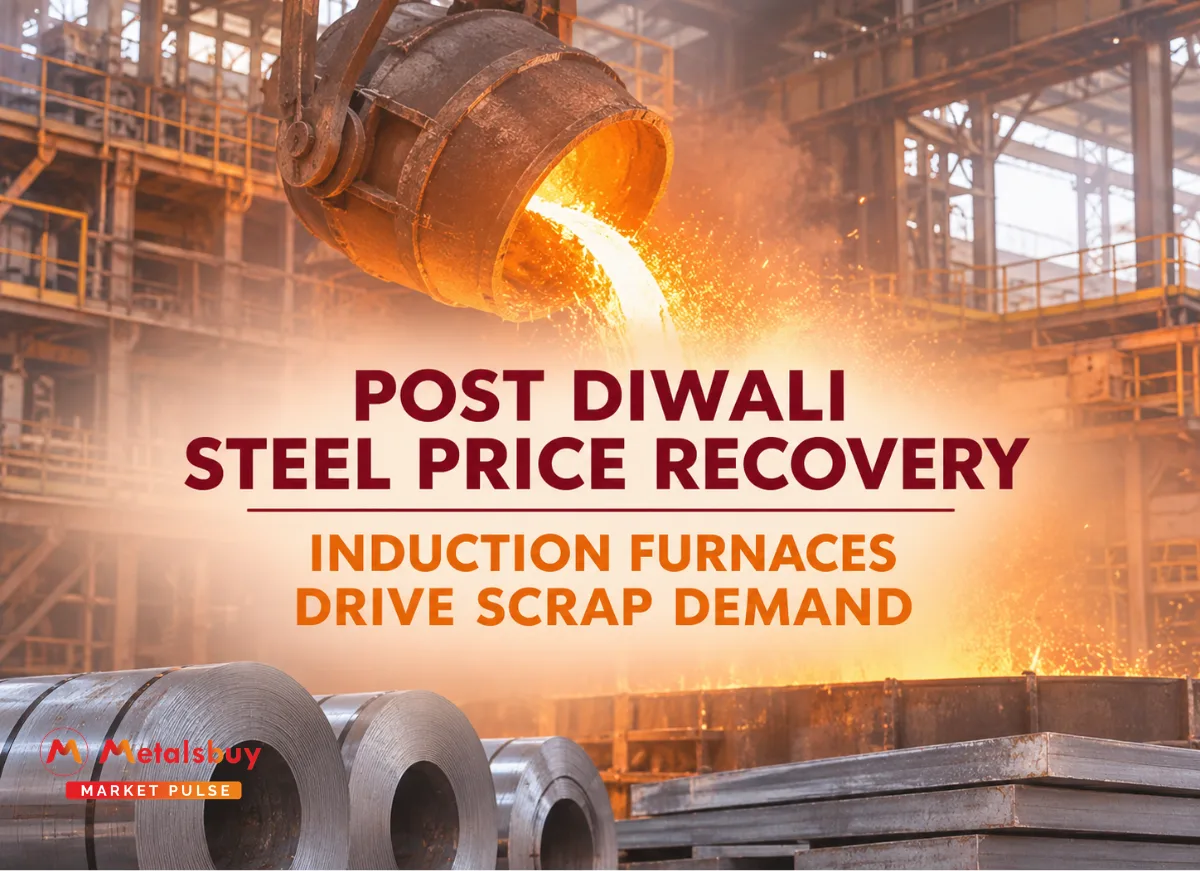
The Indian metallurgical sector is experiencing a highly strategic recalibration as the post-Diwali trading window officially opens. With domestic steel prices gaining noticeable upward momentum across key regional hubs, the industry is witnessing a cautious but definitive resumption of buying activity. While export corridors for flat products remain steady yet subdued, the localized demand for long construction products and intermediate raw materials is driving a remarkably healthy domestic recovery. By prioritizing immediate procurement needs over speculative bulk buying, the market is setting a stable, resilient foundation for India's manufacturing and construction supply chains as they prepare for the upcoming winter industrial peak.
Domestic long products and billets see targeted price appreciation
The conclusion of the autumn festive season has triggered a calculated and highly encouraging upward trend in regional rebar and intermediate steel prices. As the heavy logistical pauses associated with the Diwali holidays come to an end, downstream contractors and regional distributors are steadily returning to the spot market. However, the current purchasing behavior is defined by strict commercial discipline. Rather than engaging in large-volume inventory hoarding, buyers are heavily focused on securing materials for their immediate, near-term project requirements. This targeted procurement strategy is generating a steady, sustainable demand curve that is actively pushing base prices higher across critical industrial corridors.
Market intelligence and trading data highlight this upward pricing trajectory for long products. In the central Indian manufacturing hub of Raipur, benchmark rebar prices experienced a solid increase of ₹600 per tonne, settling firmly at the ₹50,300 per tonne mark on an ex-works basis. Concurrently, the wholesale rebar market in Mumbai maintained a highly stable baseline, holding flat at approximately ₹51,900 per tonne. The intermediate steel market mirrored this positive sentiment, with billet prices in Durgapur and Raipur climbing by ₹500 and ₹400 per tonne, respectively. This uniform appreciation across regional billet markets proves that secondary rolling mills are actively securing their foundational feeds, anticipating a rapid acceleration in end-user construction activity in the coming weeks.
Backend raw materials and scrap markets reflect tightening supply
Upward adjustments in sponge iron and melting scrap prices highlight a strengthening fundamental supply chain for secondary induction furnace operators. The positive pricing momentum generated by finished long products is flawlessly trickling down into the backend raw material ecosystem. India's vast secondary steel sector, which accounts for nearly half of the nation's crude steel output, relies heavily on a continuous feed of direct reduced iron and high-grade melting scrap. As induction furnace operators ramp up their daily melting schedules to capitalize on rising billet and rebar prices, their immediate procurement of these essential raw materials has naturally intensified.
This synchronized demand has successfully placed a firm pricing floor under the domestic scrap and sponge iron markets. Recent spot market transactions reflect this tightening supply. Coal-based sponge iron originating from the Bellary industrial belt witnessed a healthy price hike of ₹400, reaching ₹29,200 per tonne on an ex-works basis. The metallic scrap market is displaying similar strength, with heavy melting scrap (HMS 80:20) in Mumbai remaining incredibly stable at ₹35,400 per tonne, while melting scrap out of the Alang shipbreaking yards edged up by ₹200 to hit ₹37,400 per tonne. Additionally, steel ingots in the Mandi market rose by ₹400 to reach ₹46,000 per tonne. These incremental but widespread price hikes across the raw material spectrum indicate that secondary steelmakers are successfully protecting their profit margins while absorbing higher input costs, a clear sign of a highly active manufacturing base.
Flat steel exports navigate steady but subdued international demand
Indian hot rolled coil export quotations remain largely unchanged as competitive asian supply and holiday inactivity limit fresh overseas negotiations. While the domestic market for long products enjoys a rapid post-holiday revival, the international trade environment for Indian flat steel continues to navigate a period of sideways consolidation. The export market for hot-rolled coils remains broadly stable, though fresh high-volume bookings have been temporarily limited by the recent festive inactivity and the shifting pricing dynamics of competing Asian manufacturing hubs.
According to global trade assessments, Indian hot-rolled coil export prices have held incredibly firm. Quotations for European destinations remain anchored at approximately $660 per tonne on a free-on-board basis, supported by slightly firmer market conditions within the European Union. Similarly, export offers directed toward the Middle East are holding steady around the $580 per tonne mark. However, Indian exporters are facing stiff competition in the Southeast Asian corridors. Aggressively priced hot-rolled coil shipments from Indonesia have constrained Indian opportunities in Vietnam, where offers from major Indian mills were last heard hovering between $570 and $575 per tonne on a cost and freight basis. Meanwhile, the domestic pricing for hot-rolled coils in Mumbai remains robust and unchanged at roughly ₹62,475 per tonne, proving that domestic consumption is successfully buffering primary integrated mills against any sluggishness in the international seaborne market.
Securing a resilient foundation for the winter industrial cycle
The gradual need based resumption of trading activity sets a cautiously optimistic and highly stable tone for the remainder of the financial quarter. From a broader macroeconomic perspective, the current blend of cautious domestic restocking and stable export pricing provides the Indian steel industry with an exceptionally healthy commercial environment. The fact that buyers are avoiding speculative purchasing prevents the market from overheating and eliminates the risk of a sudden, margin-destroying price collapse.
As the migrant workforce fully returns to civil engineering sites and heavy manufacturing facilities over the coming days, the velocity of domestic steel consumption will naturally accelerate. The central government’s extensive capital expenditure deployment for national highway networks, urban housing, and railway modernization will dictate the primary demand curve. By entering this critical winter execution phase with rising rebar prices, a tightly supplied scrap market, and insulated flat steel revenues, Indian primary and secondary steelmakers are perfectly positioned. This disciplined market recovery guarantees that the domestic metals supply chain will remain highly profitable, deeply resilient, and globally competitive as the calendar year draws to a successful close.