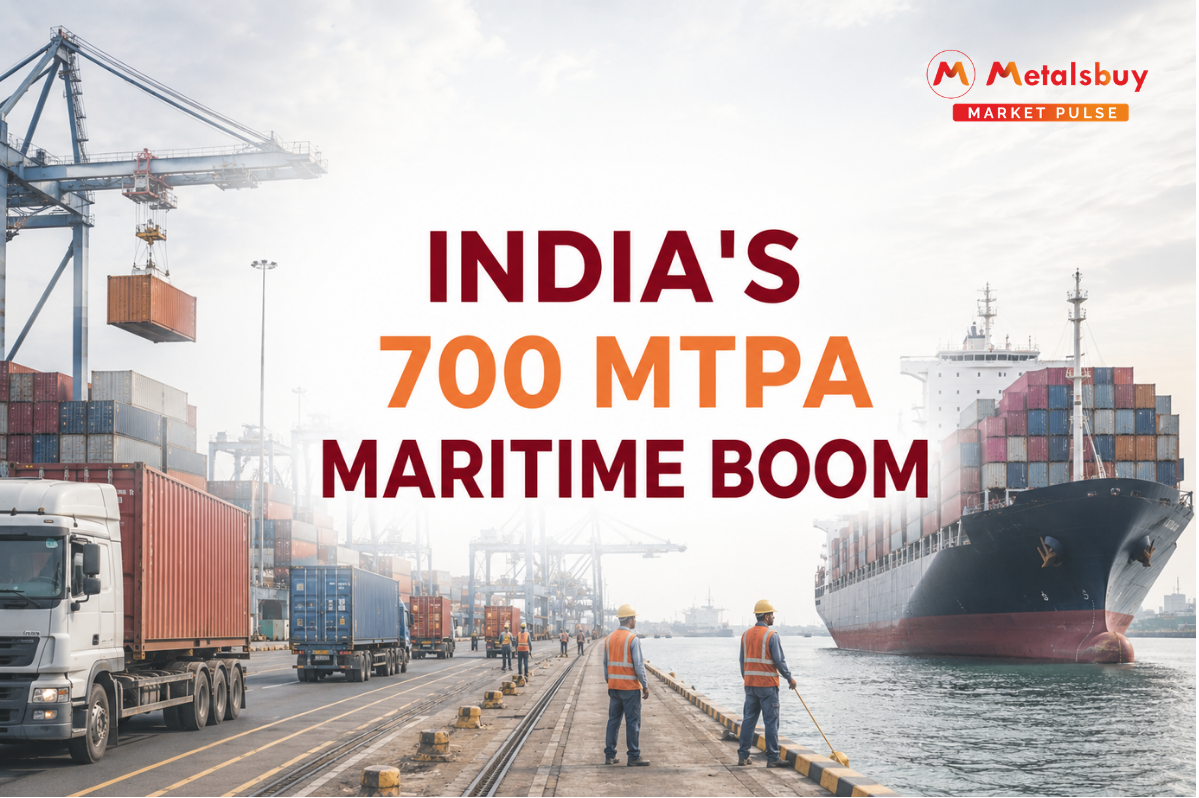
India is accelerating its maritime expansion plans under the Viksit Bharat 2047 vision, targeting an ambitious addition of over 700 million tonnes per annum (MTPA) to its port capacity by 2030, alongside significant growth in the shipbuilding sector.
KEY HIGHLIGHTS
- Targeted Port Expansion: Over 700 MTPA of additional capacity by 2030.
- Vadhavan Port Contribution: Projected to add 164 MTPA by 2030-31.
- Tuticorin Outer Harbour: Expected to contribute 39 MTPA.
- Kandla Tuna Tekra Terminal: Aiming to add 33 MTPA by 2027-28.
- Inland Waterways Cargo: Exceeded 200 million tonnes, achieving the MIV 2030 target early.
- Shipbuilding Growth: Domestic output surged by 41%, from 40,923 GT in 2024 to 57,637 GT in 2025.
- Increased Vessel Value: Average contract value per vessel soared by over 400%, from ₹41 crore to ₹212 crore.
- Mechanisation Goals: Target to increase cargo handling mechanisation from 76% (FY25-26) to 93% by 2030.
- Digitisation Target: Aiming for 100% digitisation across the maritime sector by 2030.
MARKET ANALYSIS
In a strategic push to fulfill the objectives of the Viksit Bharat 2047 vision, the Indian government has outlined a comprehensive strategy to significantly bolster its maritime infrastructure. The cornerstone of this initiative is the ambitious goal to augment the nation's port capacity by more than 700 million tonnes per annum (MTPA) by the year 2030. This extensive capacity addition is expected to be achieved through a combination of developing new greenfield port infrastructure, extensive mechanisation of existing facilities, broad operational improvements, and a strategic increase in private sector participation.
The targeted expansion plan involves 306 MTPA at major ports and 193 MTPA at crucial non-major ports. An additional 183 MTPA is projected through heightened mechanisation, operational efficiency, and public-private partnerships (PPP) across various emerging ports. The emphasis on PPP projects is particularly notable, with cargo handled through these initiatives projected to escalate from 44% in 2013-14 to an impressive 85% by 2030-31.
Furthermore, the government is focusing on modernization, aiming to increase cargo handling mechanisation across ports from current levels to 93% by 2030, and setting a target for complete digitisation across the maritime sector to enhance logistics efficiency and transparency. India has already established itself as the leading ship recycling nation globally, and its inland waterways have seen cargo movement surpass 200 million tonnes, successfully meeting the Maritime India Vision (MIV) 2030 targets ahead of schedule.
WHAT IT MEANS FOR THE STEEL INDUSTRY
The massive scale of India's maritime expansion presents a substantial and sustained catalyst for the domestic steel industry. The construction of new ports, terminals, and the expansion of existing facilities require enormous quantities of steel for structural frameworks, piling, reinforcement, and specialized infrastructure.
Key projects like the Vadhavan Port, Tuticorin Outer Harbour, and Kandla Tuna Tekra Terminal will be significant consumers of long and flat steel products. Furthermore, the targeted growth in the domestic shipbuilding sector, evidenced by the planned greenfield shipbuilding clusters in Tamil Nadu, Andhra Pradesh, and Gujarat, translates directly into increased demand for heavy steel plates and specialized marine-grade steel.
The 41% surge in domestic shipbuilding output and the fivefold increase in average vessel contract values indicate a shift towards manufacturing larger, more complex vessels, further intensifying the requirement for high-quality steel. This maritime infrastructure push effectively ensures a robust, long-term order book for steel manufacturers supplying critical infrastructure and shipbuilding projects.
MARKET OUTLOOK
The outlook for India's maritime and related industrial sectors is highly optimistic. The government's clear roadmap and demonstrated ability to meet early targets, such as in inland waterways, signal a strong commitment to execution. The focus on public-private partnerships will likely drive significant private investment, ensuring the financial viability and technological advancement of these projects.
The concurrent development of port capacity and shipbuilding capabilities positions India to become a more dominant player in global maritime trade and manufacturing. As institutional resilience is prioritized in future planning, the sector is being structured to not only foster rapid growth but also to withstand global geopolitical uncertainties, creating a stable environment for long-term investments in infrastructure and the supporting steel and manufacturing industries.