KEY HIGHLIGHTS
- September Offer: $522 per tonne CFR Ho Chi Minh City for SAE1006 finished HRC on volume orders exceeding 20,000 tonnes
- Price Revision: Downward strategic adjustment of $8 per tonne from the established August baseline of $530 per tonne
- Indian Import Dynamics: Export offers to Vietnam dropped by $10 per tonne week-over-week to land at roughly $505 per tonne
- Month-Over-Month Variance: Indian steel import pricing traces a $19 per tonne decline compared to recorded July benchmarks
- Global Market Divergence: United States spot prices observed steady upward momentum while Chinese rates faced seasonal corrections
MARKET ANALYSIS
In a proactive move to align with shifting domestic demand and foster market resilience, Vietnamese steel manufacturing giant Formosa Ha Tinh Steel (FHS) has rolled out a strategic pricing revision for its hot-rolled coil (HRC) segment ahead of September deliveries. Rather than a sign of weakness, this market recalibration demonstrates a calculated adjustment to current regional economics. The enterprise has officially set its benchmark SAE1006 finished hot-rolled coils at approximately $522 per tonne CFR Ho Chi Minh City, specifically targeting bulk procurement orders that surpass the 20,000-tonne threshold. This targeted reduction of $8 per tonne from the August pricing baseline of $530 per tonne showcases a highly responsive and agile management strategy designed to support domestic buyers through a transitional economic climate in Southeast Asia.
The decision arrives shortly after a similar pricing calibration by regional manufacturing competitor Hoa Phat, underscoring a broader, synchronized industry trend toward maintaining domestic competitiveness. Currently, the local steel consumption landscape in Vietnam is characterized by highly prudent procurement strategies. Downstream manufacturers, rerollers, and service centers are actively optimizing their working capital by purchasing raw material strictly for immediate production requirements. This shift away from heavy stockpiling is leading to a leaner, more efficient, and financially sound supply chain ecosystem that minimizes inventory risk.
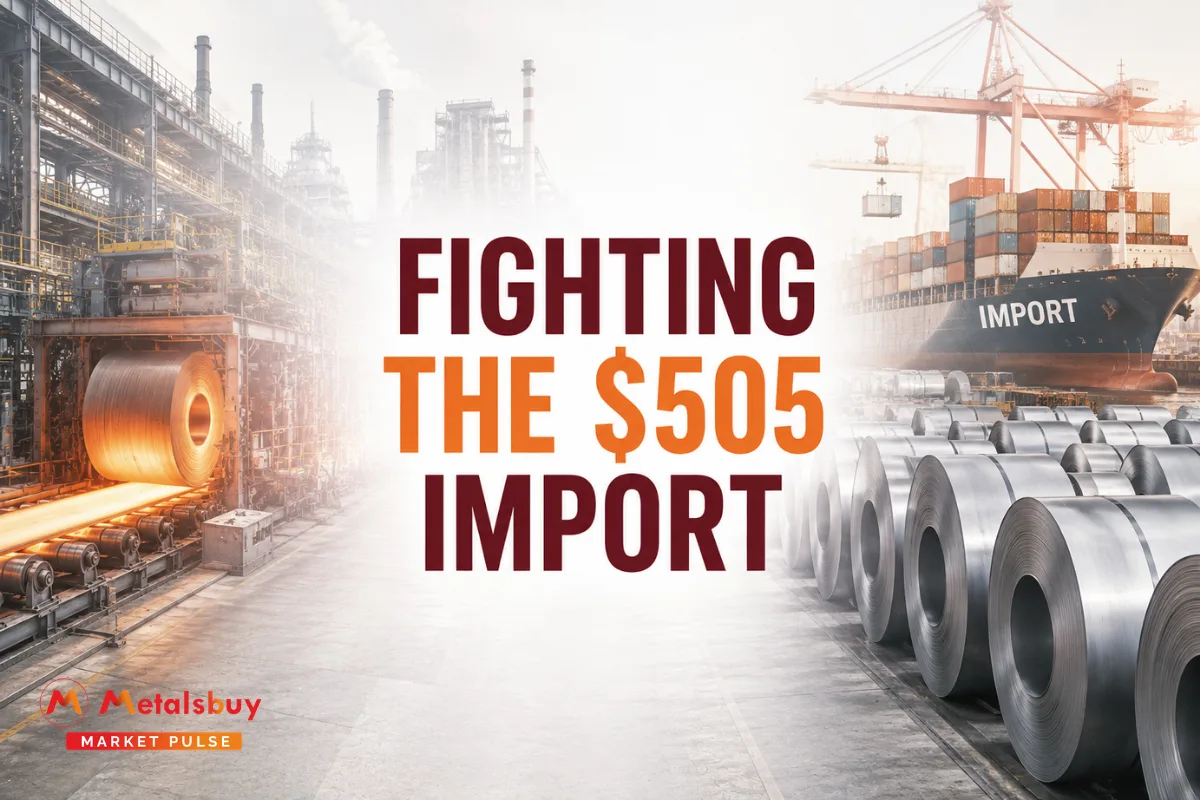
Simultaneously, the regional pricing architecture is being heavily influenced by international trade flows and global arbitrage. Competitive foreign imports, particularly from India, have established an aggressive pricing floor within the region. Indian export offerings for HRC landing in Vietnam have seen a recent week-over-week contraction of $10 per tonne, settling near the highly competitive $505 per tonne CFR mark. This represents a significant $19 per tonne decline from July levels. In this dynamic environment, domestic producers like Formosa are carefully balancing their immense capacity utilization against the influx of attractively priced overseas materials, ensuring that domestic mills remain the preferred and most reliable source for high-quality steel.
WHAT IT MEANS FOR THE STEEL INDUSTRY
The recent pricing updates from major Vietnamese mills serve as a crucial operational barometer for the broader Asian steel matrix. For downstream industries—spanning automotive manufacturing, civil construction, heavy machinery, and consumer appliances—this price recalibration offers a welcome window for margin relief. A lower baseline cost for essential raw HRC enables these critical sectors to manage their operational expenses more effectively. Ultimately, this allows manufacturers to potentially pass on cost savings to end-consumers, thereby stimulating secondary market demand and keeping the broader manufacturing engine running smoothly.
From a strategic standpoint, this pricing environment accelerates the industry's transition toward highly agile operations. The traditional era of maintaining massive, capital-heavy inventories is swiftly giving way to just-in-time production pipelines and dynamic, data-driven pricing models. By proactively narrowing the price gap between domestic production and foreign imports, Formosa is actively defending its market share while ensuring that local supply chains remain robust, localized, and uninterrupted by global shipping volatility.
Furthermore, this scenario highlights the increasing interconnectedness and resilience of global steel benchmarks. While Southeast Asia navigates competitive pricing pressures to support buyers, the global HRC market demonstrated a fascinating structural divergence throughout July. The United States market experienced steady price appreciation driven by tight spot market supplies and highly resilient consumer demand. Meanwhile, the European market found a sustainable middle ground; Italian prices were structurally buoyed by stringent EU import quotas, while Western and Southern Europe maintained pricing stability despite elevated inventory levels. Conversely, China’s market softened moderately due to expected seasonal lulls and elevated stock levels. This complex global patchwork means that international mills are continually adapting, turning regional pricing shifts into opportunities for strategic realignment.
MARKET OUTLOOK
Looking ahead to the final quarter of the year, the Southeast Asian steel sector is exceptionally well-positioned for a gradual transition toward long-term stability and growth. While current purchasing patterns remain conservative, this disciplined approach to inventory management is highly positive, as it prevents the market from facing severe, unexpected supply gluts. As major infrastructure and real estate projects across Vietnam and neighboring ASEAN regions move past seasonal monsoon disruptions and transition into active, heavy construction phases, domestic steel demand is projected to find a much stronger and consistent footing.
Additionally, shifting global trade policies and localized economic stimuli will play a pivotal role in shaping future HRC pricing trajectories. If major exporting nations like China and India experience strong domestic demand recoveries fueled by their respective infrastructure pushes, the aggressive export volumes currently pressuring Southeast Asia are likely to moderate significantly. This macroeconomic shift would grant regional producers like Formosa the pricing power and market breathing room required to inch margins upward sustainably.
Ultimately, the heavy industry’s ability to proactively adjust to immediate market signals—as clearly demonstrated by Formosa’s latest forward-looking pricing strategy—reflects a maturing, highly responsive industrial ecosystem. Industry stakeholders, investors, and downstream partners can anticipate a balanced, constructive market environment where competitive, sensible pricing fosters downstream manufacturing growth, paving the way for a more robust, technologically advanced, and economically sustainable steel value chain in the months to come.