Key Highlights
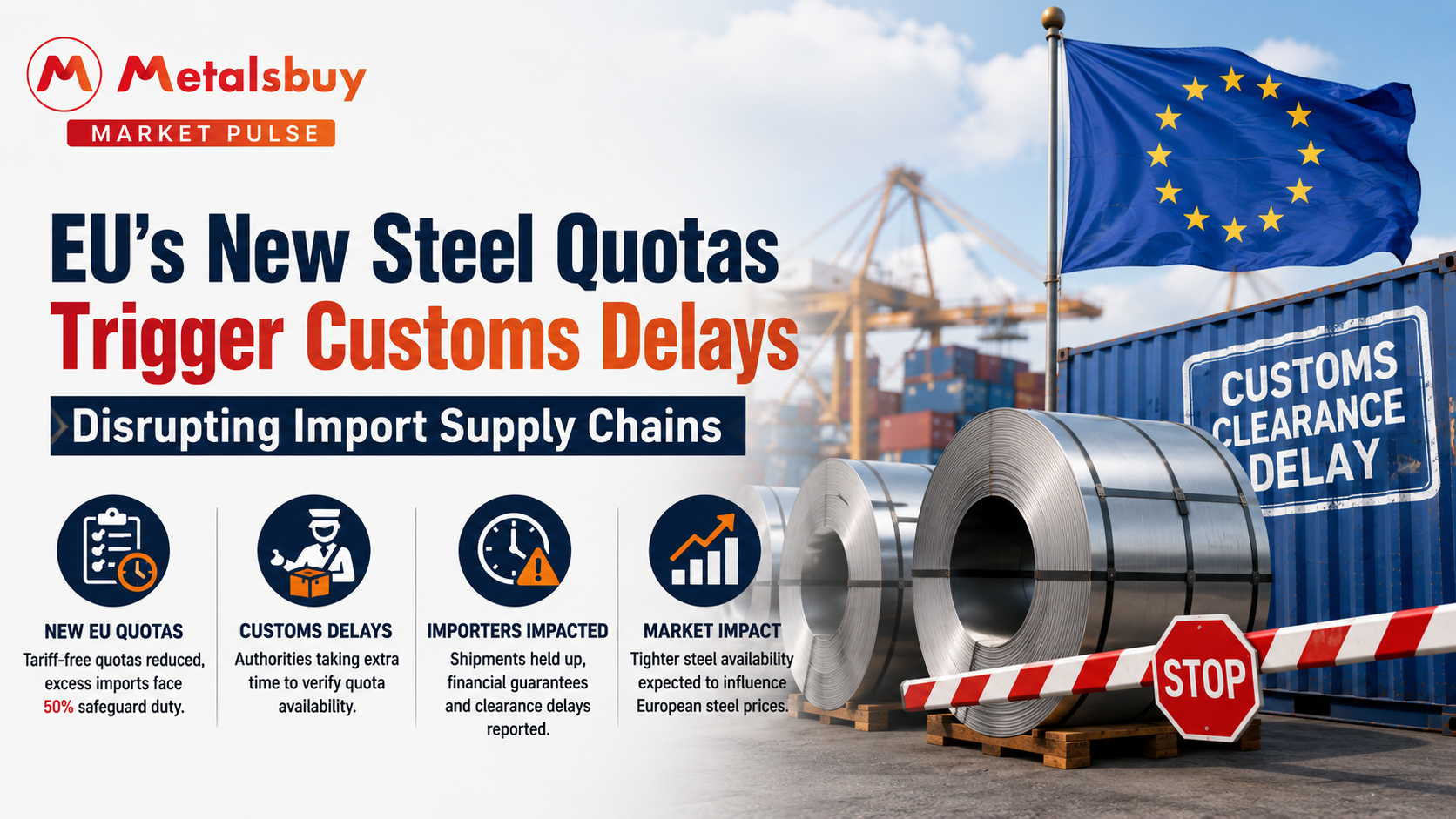
- Steel importers across the European Union are reporting customs clearance delays following the implementation of the EU's new steel safeguard quota system on 1 July 2026.
- The revised framework reduces tariff-free steel import quotas by 47% to 18.3 million tonnes annually, while imports exceeding the quota are subject to a 50% safeguard duty.
- Customs authorities are taking additional time to determine quota availability, leading to delays in clearing imported steel shipments at several European ports.
- Some importers have postponed customs clearance to avoid the risk of attracting higher safeguard duties, while others have been asked to provide financial guarantees against potential duty liabilities.
- The uncertainty is expected to tighten steel availability in the European market and could influence regional pricing in the short term.
Introduction
The European steel market is witnessing fresh disruption following the implementation of the European Union's revised steel safeguard quota mechanism. Although the new quota regime officially came into effect on 1 July 2026, its rollout has created unexpected operational challenges for steel importers, with customs authorities struggling to process shipments under the revised framework. Importers across several EU member states are reporting delays in customs clearance, creating uncertainty over whether shipments will qualify under the available tariff-free quotas or become liable for the significantly higher safeguard duty. The situation highlights how regulatory changes can immediately impact trade flows, inventory planning and procurement decisions across the steel supply chain.
Why Are Customs Clearances Being Delayed?
The revised safeguard mechanism introduced substantial changes to the allocation of country-specific and residual import quotas, but detailed quota allocations were released only one day before the regulations became effective. This limited preparation time left both customs authorities and importers with insufficient clarity on how shipments should be processed under the new rules. As a result, customs officials in several EU countries are taking additional time to verify quota availability before approving imports. In some markets, importers have even been asked to deposit funds equivalent to the potential safeguard duty until the final quota position is confirmed, placing additional pressure on working capital.
Market Analysis
The European Commission introduced the revised quota regime to protect domestic steel producers from rising imports and global overcapacity, particularly amid continued concerns over excess production from Asia. Under the new framework, annual tariff-free imports have been reduced to 18.3 million tonnes, while any steel imported beyond the allocated quotas attracts a 50% safeguard duty. While these measures are expected to improve capacity utilisation for European steelmakers, the transition has temporarily disrupted normal trading activity as importers reassess procurement strategies and shipment schedules. Market participants believe that supply tightness during the initial implementation phase could provide short-term support to European steel prices, especially in flat steel products.
Industry Impact
For steel traders, service centres and manufacturing companies that rely on imported material, the delays create uncertainty over inventory availability, delivery schedules and procurement costs. Businesses importing material from countries such as Turkey and other major exporting nations are particularly cautious, as exceeding quota limits could significantly increase landed costs through safeguard duties. The temporary disruption may also encourage buyers to shift towards domestic European producers wherever possible, supporting local mills but reducing supply flexibility. If customs bottlenecks continue beyond the initial adjustment period, downstream industries such as automotive, engineering and construction could also experience procurement delays and higher input costs.
Metalsbuy Market Pulse Insight
The latest developments underline how trade policy implementation can have an immediate impact on steel supply chains, even before the actual economic effects of the policy become visible. While the European Union's objective is to strengthen its domestic steel industry and curb excessive imports, the transition phase has exposed operational challenges that affect importers, distributors and end users alike. Over the coming weeks, market participants will closely monitor how quickly customs authorities clear the existing backlog and whether quota utilisation stabilises. The outcome will influence not only European steel prices but also export strategies of global steel suppliers targeting the EU market.
Conclusion
The implementation of the EU's revised steel safeguard quota system marks a significant shift in the region's trade protection strategy. While the measures are designed to strengthen domestic steel production and improve market stability, the initial rollout has demonstrated the importance of clear implementation guidelines and operational preparedness. Until customs procedures normalise and quota allocations become fully transparent, importers are likely to remain cautious in their purchasing decisions. The developments will continue to be closely watched by steel producers, traders and consumers across global markets as they adapt to Europe's evolving trade landscape.