Chinese Iron Ore Production Plummets Unlocking Strategic Trade Avenues For Indian Mining Sector
The global raw materials market is undergoing a significant supply-side transition as the world's largest steel producer drastically scales back its domestic mineral extraction. Recent data reveals a sharp contraction in China's iron ore output over the first three quarters of the financial year. For the Indian metallurgical and mining ecosystem, this massive operational shift in East Asia presents a dual advantage. As Chinese blast furnaces increasingly rely on imported seaborne materials to bridge their internal supply gap, Indian merchant miners are perfectly positioned to leverage this demand, ensuring robust export revenues while simultaneously satisfying India's own booming infrastructure requirements.
Analyzing the sharp decline in chinese extraction rates
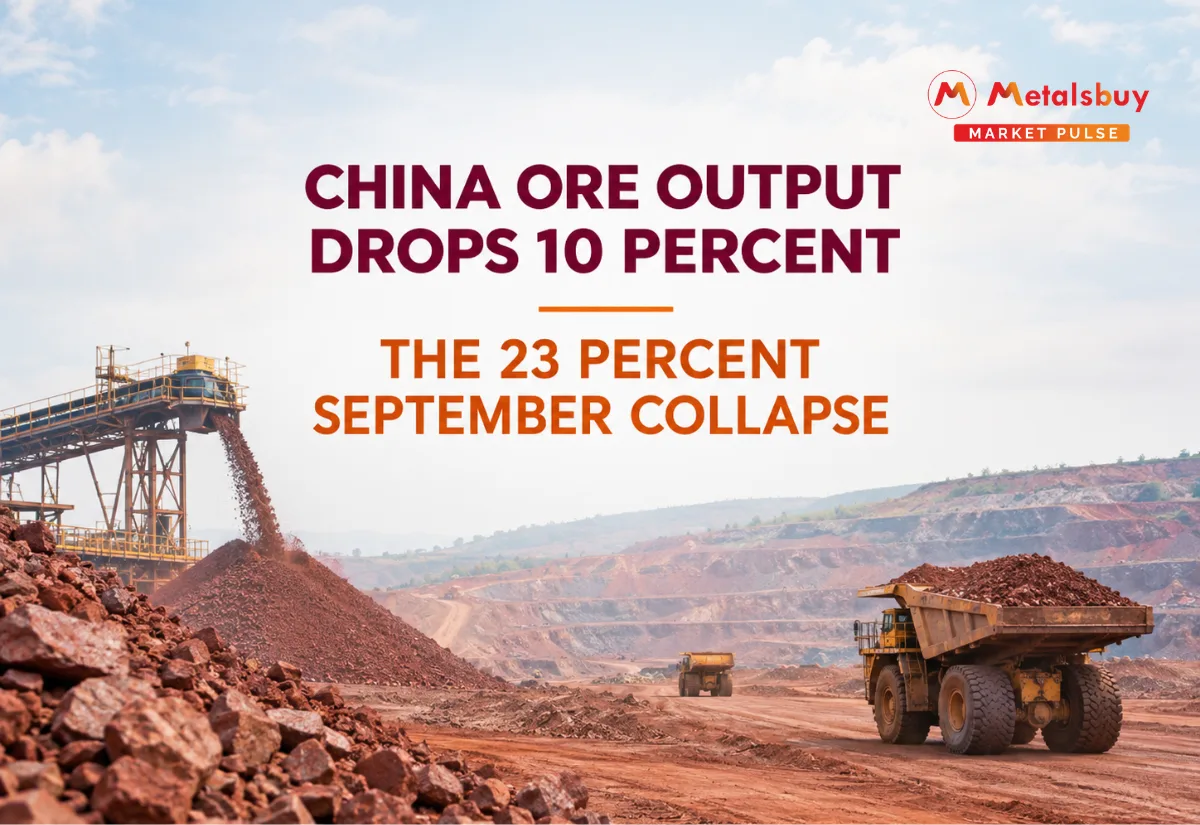
The latest statistical release underscores a deliberate and accelerating pullback in domestic resource extraction within the Chinese market. According to data from China's National Bureau of Statistics, the country's iron ore production for the January to September 2026 period amounted to approximately 665.45 million metric tonnes. This figure represents a steep 10.3 percent year-on-year decline. The pace of this contraction is notably accelerating, dropping 1.5 percentage points faster than the decline recorded over the first eight months of the year. The month of September was particularly stark, with production totaling just 63.11 million metric tonnes. This marks a staggering 23.9 percent collapse compared to September of the previous year and a 5.7 percent sequential drop from August.
This structural slowdown is largely attributed to the poor geological quality of Chinese reserves and rising operational overheads. Chinese iron ore is notoriously low in ferrous content, frequently averaging between 20 and 30 percent. Processing this rock requires extensive, energy-intensive beneficiation to transform it into a usable blast furnace feed. As Beijing enforces stricter ecological mandates and energy costs fluctuate, running these domestic beneficiation plants has become a heavy financial burden for Chinese operators. Consequently, many localized, high-cost mining operations have been forced to suspend activities indefinitely, contributing directly to the massive extraction deficit witnessed this September.
Price fluctuations create a balanced global market
While production volumes dropped, international raw material pricing exhibited dynamic movements, offering a highly favorable procurement environment for global steelmakers.
During September, the pricing of seaborne imported iron ore into China witnessed notable volatility. Benchmark prices briefly rallied early in the month, peaking at roughly $102.80 per tonne around the second week as coastal mills rushed to restock their inventories ahead of the extended autumn national holidays. However, as these immediate requirements were fulfilled, the spot market cooled significantly. By the end of September, prices drifted down to a highly manageable $95 per tonne as supply outstripped immediate buyer appetite.
For Indian integrated steelmakers who occasionally rely on the international market to source specific high-grade ores for blending purposes, this sub-hundred-dollar pricing floor acts as a massive financial cushion. It prevents severe cost-push inflation within the domestic manufacturing supply chain and allows local mills to maintain highly competitive pricing for their finished construction steel and flat products.
Indian miners capitalize on seaborne demand opportunities
The widening gap between China's steady hot metal production and its shrinking domestic ore extraction creates a highly lucrative vacuum for international suppliers. As Chinese steelmakers substitute their expensive, low-quality domestic ore with imported materials to maintain blast furnace efficiency, the demand for seaborne cargo remains exceptionally resilient. Indian merchant miners are actively stepping up to fulfill a portion of this requirement. India historically generates a surplus of low-grade iron ore fines during the extraction of high-grade lumps. While the domestic steel industry predominantly consumes the premium lump material, these lower-grade fines find a ready and willing buyer in the Chinese market.
This export momentum is a vital pressure release valve for the Indian mining landscape. States like Odisha, Jharkhand, and Karnataka are currently pushing their extraction limits to record highs to support local steel capacity. The ability to export sub-58 percent grade fines to Chinese buyers, who possess the specialized sintering technology to process them efficiently, creates a win-win scenario. It prevents ecological hazards associated with massive stockpile accumulations at Indian mine heads and converts potential industrial waste into highly profitable export cargo.
Strengthening domestic supply chains amid global shifts
From a broader macroeconomic standpoint, the shifting dynamics in the global iron ore trade validate India's balanced approach to resource management. The Indian government has consistently prioritized domestic raw material security to support its ambitious target of achieving 300 million tonnes of annual crude steel capacity by 2030. The current international environment, characterized by China's falling extraction rates and stable global pricing, perfectly complements this national vision. Indian miners are achieving a flawless operational balance, funneling the absolute best-in-class raw materials inward to feed the booming national infrastructure and automotive sectors, while profitably exporting the surplus fines to global markets.
Furthermore, the foreign exchange revenue generated from these international trade corridors is being actively reinvested back into the Indian mining infrastructure. Domestic companies are deploying this capital to modernize their extraction techniques, invest in sustainable slurry pipelines, and upgrade rail-to-port logistics. This dual-engine growth strategy ensures that the Indian mining and metals ecosystem remains highly resilient, deeply profitable, and insulated from sudden macroeconomic shocks for the decades to come.