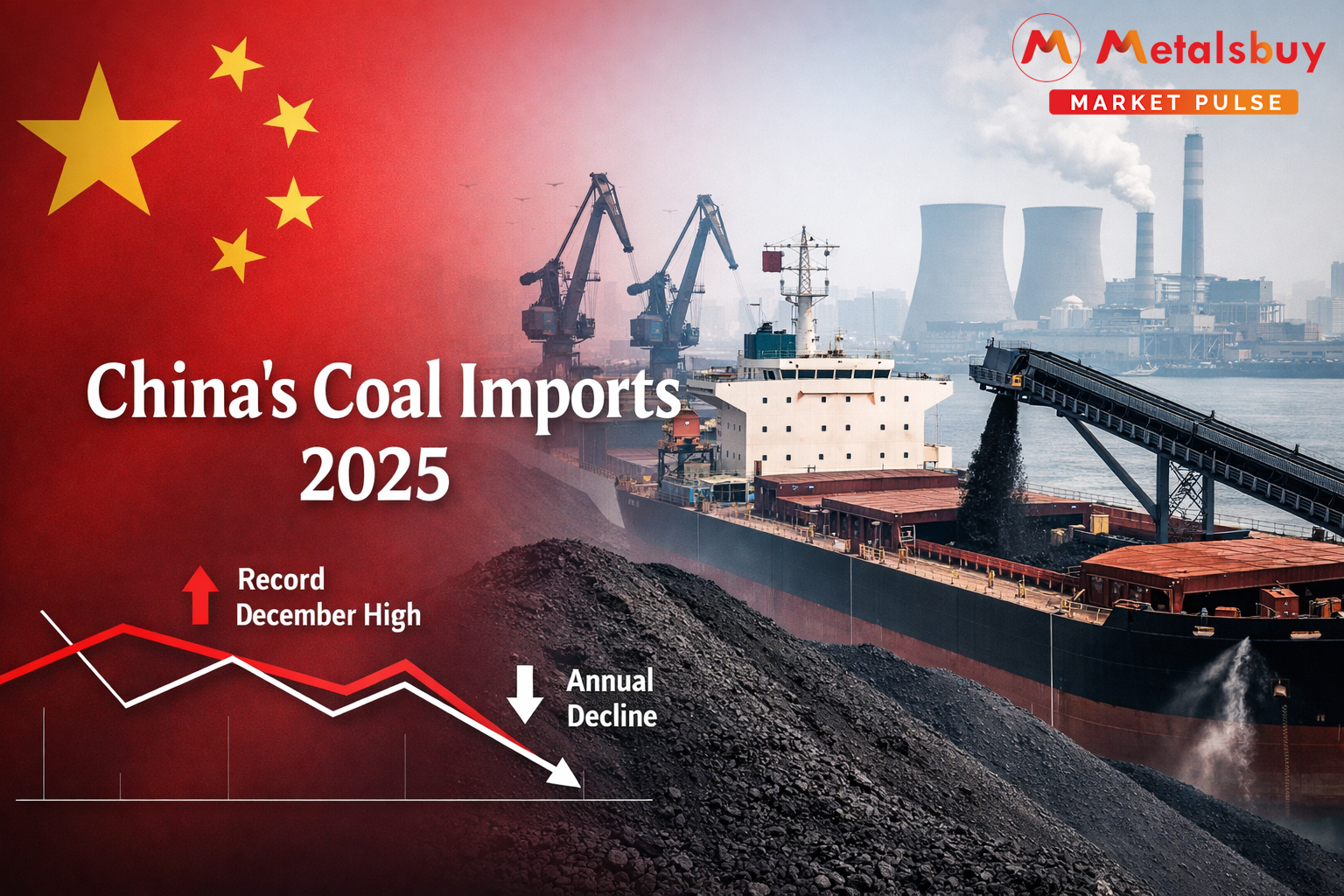
China’s coal import dynamics in December 2025 highlighted a sharp contrast between short-term seasonal demand and broader structural trends. Customs data shows that coal imports surged to an all-time monthly high in December, even as total imports for the full year registered a notable year-on-year decline.
December Imports Set a New Record
Coal inflows into China rose to approximately 58.6 million tonnes in December, marking the highest monthly import volume ever recorded. The spike was largely driven by:
-
Winter heating demand, which traditionally lifts coal consumption across northern regions
-
Inventory rebuilding by utilities and traders ahead of peak winter months
-
Domestic price movements, which temporarily made imported coal more competitive than locally mined material
Power producers and large industrial consumers increased procurement to ensure uninterrupted supply during periods of heightened electricity demand, particularly as cold weather conditions intensified toward year-end.
Annual Imports Still Down Sharply
Despite the December surge, China’s total coal imports for 2025 declined by around 10% year-on-year, settling near 490 million tonnes. This drop reflects a combination of structural and policy-driven factors:
-
Higher domestic coal output, reducing reliance on seaborne supply
-
Moderation in coal-fired power generation growth, as renewables captured a larger share of incremental electricity demand
-
Stricter inventory and procurement discipline among utilities earlier in the year
The annual decline underscores that December’s record volumes were more of a seasonal correction than a reversal of the broader trend.
What This Means for the Global Coal Market
China remains the world’s largest coal importer, making its demand patterns critical for global trade flows. The divergence between monthly and annual data suggests:
-
Short-term volatility in seaborne coal demand linked to weather and price arbitrage
-
Limited upside for sustained import growth unless domestic supply tightens significantly
-
Continued pressure on exporters, particularly those heavily dependent on Chinese demand
Exporters in Asia-Pacific markets may continue to see strong month-to-month fluctuations, but the annual trend indicates a more cautious and selective import strategy by Chinese buyers.
Outlook for 2026
Looking ahead, China’s coal imports are expected to remain seasonally strong during winter months, while full-year volumes may stay under pressure due to expanding renewable capacity, stable domestic coal production, and policy emphasis on energy security through self-sufficiency.
December’s record imports highlight China’s ability to rapidly adjust procurement when needed, but the annual decline reinforces that imported coal is increasingly a balancing tool rather than a growth driver in the country’s energy mix.