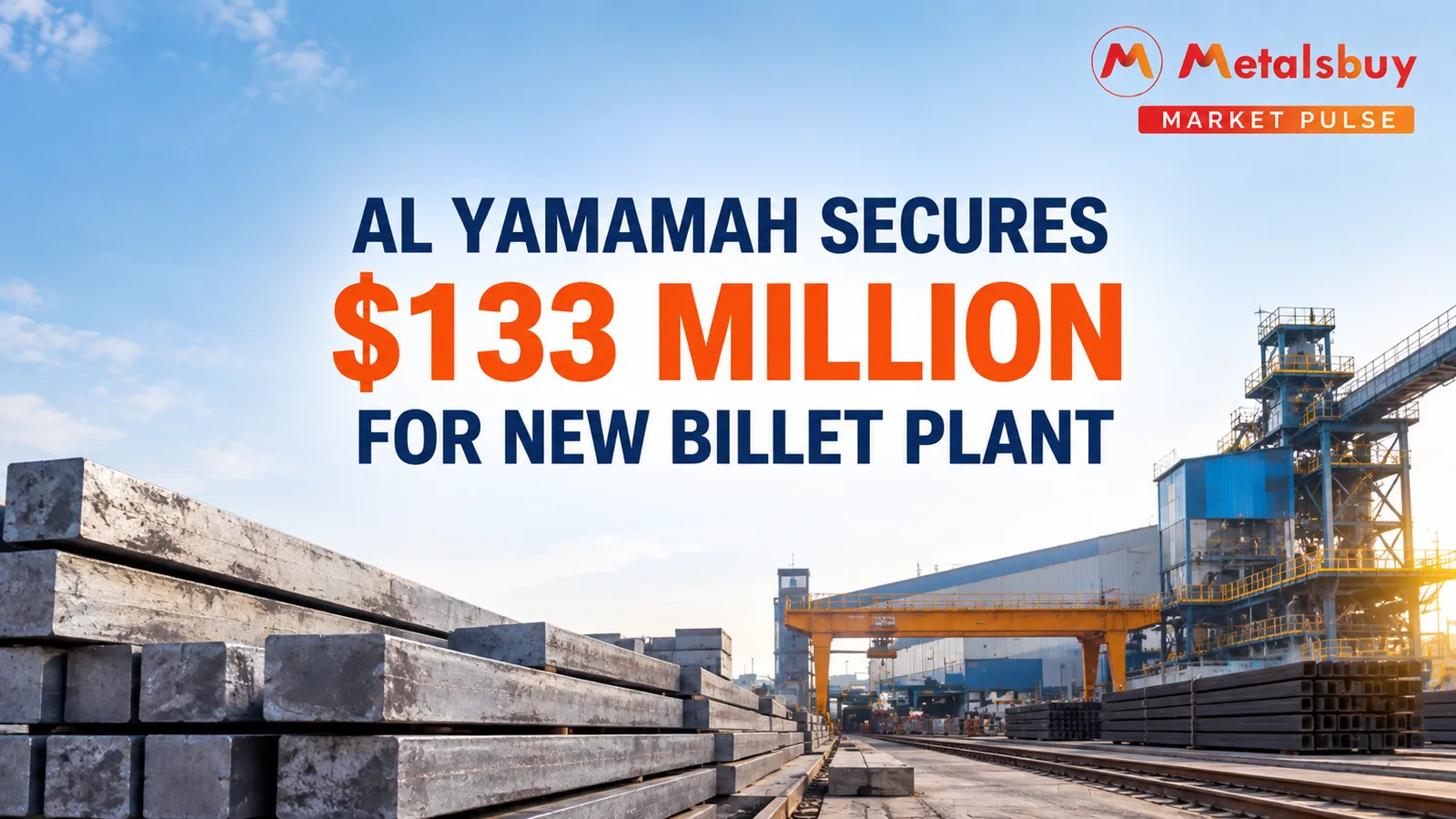
Saudi Arabia’s Al Yamamah Steel Industries has secured SAR 500 million ($133 million) in financing from Arab National Bank for its planned steel billet plant. The seven-year facility will be used by its subsidiary, Al Yamamah Company for Reinforcing Steel Bars, to fund construction of the project.
Moving upstream
Al Yamamah is mainly known for its reinforcing steel business, so the billet project takes the company one step back in the production chain. Billet is the semi-finished steel product used to make rebar and other long steel products, making it an important input for the company’s existing business.
The move could give Al Yamamah greater control over its billet requirements instead of depending as heavily on purchases from other producers. That becomes particularly useful when billet prices are volatile or supplies become tighter.
The investment so far
The latest financing is part of a series of steps already taken towards the project. Al Yamamah’s subsidiary had earlier increased its capital by SAR 300 million, while a separate contract worth SAR 270 million was signed with Danieli for the manufacturing, supply and installation of the billet plant’s equipment.
The main numbers are straightforward:
- SAR 500 million ($133 million): new financing
- 7 years: financing period
- SAR 300 million: earlier capital increase
- SAR 270 million: Danieli equipment contract
The equipment contract is expected to run for around 2.5 years, so the project is still some distance away from becoming an operating steelmaking facility.
Why billet production matters
For a rebar producer, having billet production in-house can make the supply chain simpler. Instead of buying a key semi-finished input and then converting it into finished steel, the company can control more of the process itself.
There is also a cost angle. Billet prices can move independently depending on scrap availability, steel demand, energy costs and regional trade flows. Producing its own billet will not remove all cost pressures, but it could give Al Yamamah more control over one important part of its raw-material requirement.
Saudi steel capacity keeps expanding
The project also fits into the broader push to expand steelmaking and downstream manufacturing in Saudi Arabia. The country has been encouraging more local production as construction, infrastructure and industrial activity continue to create demand for steel.
For Al Yamamah, this is a fairly logical expansion rather than a complete change in direction. The company already has a business built around reinforcing steel, and adding billet production gives it more control over the material that goes into that business.
What happens next
The immediate focus will be on construction and equipment installation. The latest financing means a major part of the funding requirement is now in place, while the Danieli contract gives the project a clear equipment supplier.
The important number to watch from here will be the plant’s actual production capacity and commissioning timeline. For Al Yamamah, the billet plant is ultimately about having greater control over its steel supply chain, and that could become increasingly useful as Saudi Arabia adds more steel-consuming projects.
Disclaimer: This article is for information and market discussion purposes only. It is based on publicly available information and should not be considered investment or trading advice.